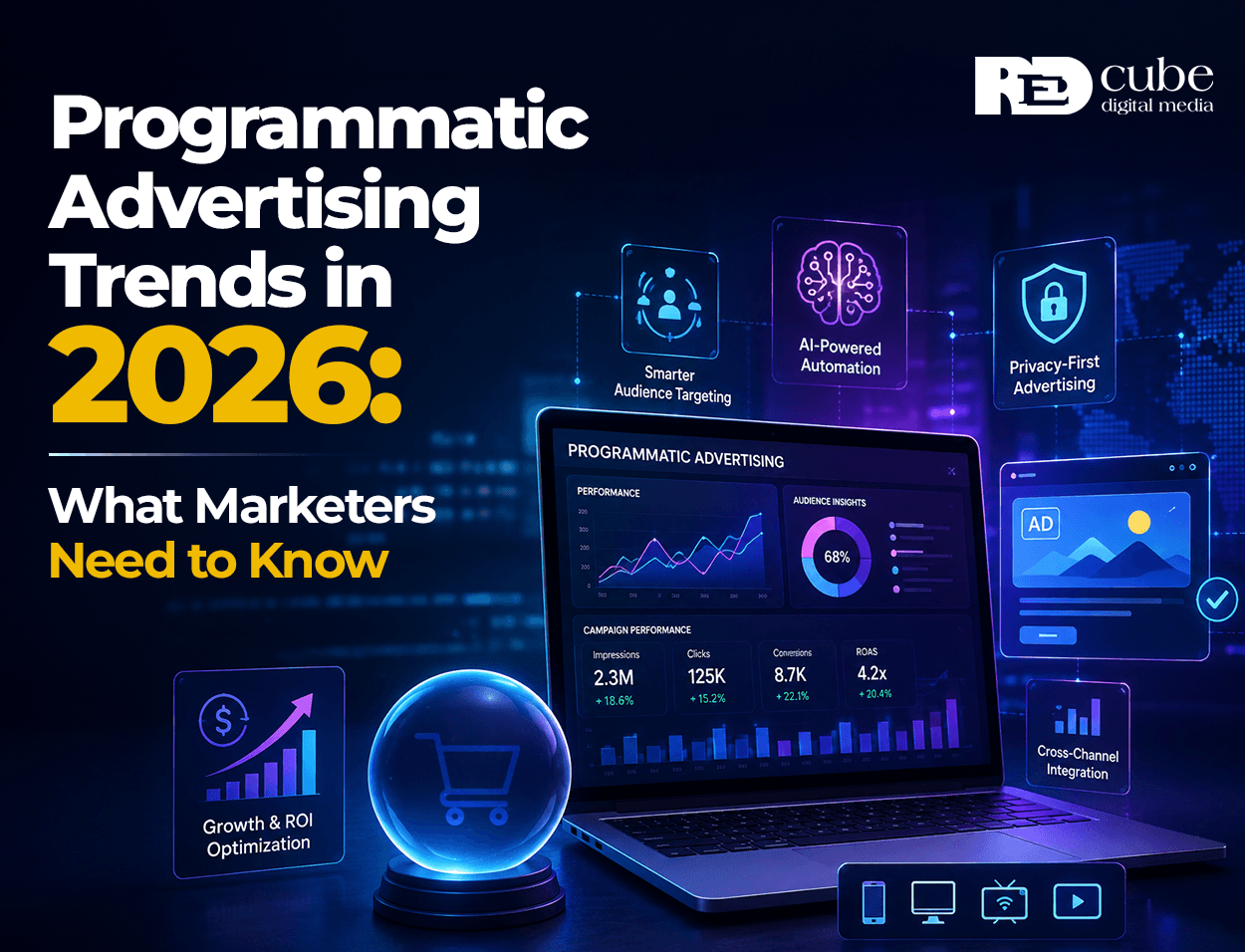
Media buying is changing fast. Brands no longer want broad campaigns with unclear results. They want better targeting, sharper reporting, cleaner data, and stronger control over where their ads appear.
That is why programmatic advertising is becoming a major part of modern digital advertising.
In 2026, media buying will be more automated, more data-led, and more connected across platforms. Brands will still need strong creative ideas and human judgment, but the way campaigns are planned, bought, and measured will become more advanced. AI-powered advertising will play a larger role in that shift.
What Programmatic Advertising Means
Programmatic advertising is automated media buying.
Brands no longer buy advertisements themselves and instead turn to technology companies to help them connect with websites, applications, video, and audio platforms for advertising purposes.
Technology like this relies on audience data, bidding rules, campaign goals, and placement signals to establish which ad goes where. In this way, brands can target consumers more accurately than they used to be able to do through traditional media purchases.
For instance, it allows advertisers to select an audience based on the place where users are from, their device choice, interests, content type, purchasing intentions, and previous visits to websites. Considering those factors, programmatic advertising helps with awareness creation, retargeting, leads generation, and performance.
It is estimated that the total amount of money spent on programmatic media worldwide in 2024 will amount to $595 billion and will most likely reach $800 billion by 2028, which is indicative of the growing use of automated methods of buying media by businesses.
Why 2026 Will Be Important
Digital advertising is becoming more performance-focused.
Brands want to know what every campaign is doing. They want answers to simple but important questions.
- Who saw the ad?
- Where did the ad appear?
- How many people took action?
- Which audience responded better?
- Which creative worked best?
- Which platform brought stronger results?
In 2026, Programmatic advertising will help marketers answer these questions faster. EMARKETER reported that programmatic advertising would account for nearly 9 in 10 digital display ad dollars worldwide in 2025. This means automated buying is already becoming the standard way many brands purchase display media.
For your business, the lesson is clear. Media planning can no longer depend only on assumptions. Your campaigns need data, testing, creative quality, and clear measurement.
How AI-Powered Advertising Will Change Media Buying
AI-powered advertising will support faster decisions.
AI can help marketers study audience behavior, predict campaign performance, test creative versions, improve bidding, and find better placement opportunities.
IAB reported in 2025 that only 30% of agencies, brands, and publishers had fully integrated AI across the media campaign lifecycle, while half of those not fully integrated expected to do so by 2026.
This means many brands are still early in their AI adoption. Businesses that prepare now can build a cleaner, smarter advertising process.
AI can support:
- Audience segmentation
- Budget allocation
- Creative testing
- Bid optimization
- Campaign reporting
- Fraud detection
- Frequency control
- Performance forecasting
But AI should not replace strategy. It should support better human decisions. A strong campaign still needs clear goals, strong messaging, relevant creative, and proper tracking.
Connected TV Will Become A Bigger Channel
Connected TV will make programmatic media buying more valuable.
People are watching more content on smart TVs, OTT platforms, and streaming apps. This creates new opportunities for brands that want high-quality video reach with better audience targeting.
In India, digital advertising is growing quickly. Economic Times reported that digital accounts for nearly 70% of total ad spending in India, while connected TV households have grown from around 22 million three years ago to nearly 78 million and may reach 100 million by the end of 2027.
This matters because television-style advertising is becoming more measurable. Brands can now use programmatic advertising to run video campaigns across connected TV and digital platforms with better control over audience, reach, and frequency.
Why Data Quality Will Matter More
Better Digital Advertising needs better data.
Programmatic campaigns depend on data. If your data is weak, your targeting, reporting, and optimization will also suffer.
In 2026, brands will need to focus more on:
- First-party customer data
- Website analytics
- CRM quality
- Consent-based marketing
- Clean audience lists
- Landing page tracking
- Call and lead tracking
- Clear privacy policies
- Accurate conversion events
Privacy rules and signal loss are already changing how advertisers collect and use audience information. Brands that build clean first-party data will have a stronger base for AI-Powered Advertising and future media buying.
What This Means For Small And Growing Brands
Programmatic advertising is no longer only for large brands.
Small and mid-size businesses can also use programmatic campaigns when the strategy is planned properly. You do not need to target everyone. You need to reach the audience most relevant to your offer.
For example, a real estate brand can target users in selected locations. A clinic can run awareness campaigns around specific treatments. A retail business can retarget website visitors. A coaching institute can promote admission campaigns to selected age groups and areas.
This makes digital advertising more precise and more useful for growing businesses.
However, your website and landing pages must be ready. If users click your ad and reach a weak page, the campaign will lose value. Programmatic works best when your website, creative, offer, and tracking system are aligned.
Programmatic Advertising Trends To Watch In 2026
Media buying will become more integrated.
Marketers should prepare for these trends.
More AI-led campaign planning
AI will help with audience research, budget planning, reporting, and creative testing.
More connected TV advertising
Streaming and smart TV growth will make video campaigns more targeted.
More privacy-focused targeting
Brands will use first-party data, contextual targeting, and consent-based marketing more carefully.
More creative personalization
Different audience groups will receive different ad messages based on intent and behavior.
More transparent reporting
Brands will ask for clearer reports on placements, conversions, cost, and campaign quality.
More full-funnel planning
Programmatic will work with search ads, SEO, social media, website content, and remarketing instead of running separately.
How RedCube Digital Can Help
Programmatic success needs strategy, creative, data, and tracking.
At RedCube Digital, we help brands plan digital advertising campaigns that are clear, measurable, and business-focused. Our team can support your brand with media planning, campaign setup, performance marketing, creative direction, website development, landing pages, analytics, and AI-powered advertising readiness.
The goal is not just to spend money on ads. The goal is to reach better audiences, reduce waste, and improve business outcomes.
So Overall Here Is What It Is
Buying media programmatically is going to change the way brands plan and execute marketing strategies in 2026. Programmatic advertising makes digital advertising more efficient, quantifiable, and focused on targeting the right audience. AI in advertising will assist marketers in making quicker decisions, testing a larger number of concepts, and improving the effectiveness of campaigns.
Yet, technology is not sufficient on its own to generate results. A good campaign still requires strong creativity, a comprehensive understanding of the target audience, a well-designed landing page, good data, and thorough reporting.
We are at the forefront of helping our clients to plan marketing campaigns effectively at RedCube Digital. If you wish to improve your paid campaigns, programmatic strategy, or marketing in general, reach out to RedCube Digital today.
Let us know what you think about the possibility of improving media buy.
Frequently Asked Questions
Q1. What is Programmatic Advertising?
A. Programmatic Advertising is automated digital media buying that uses data and technology to place ads across websites, apps, video platforms, connected TV, and other digital channels.
Q2. Is programmatic advertising useful for small businesses?
A. Yes. Small businesses can use it for local targeting, retargeting, awareness, and lead generation when campaigns are planned with clear goals.
Q3. How is programmatic advertising different from normal digital advertising?
A. Digital advertising is the broader category. Programmatic advertising is one method of buying digital ads through automated platforms.
Q4. What is AI-powered advertising?
A. AI-powered advertising uses artificial intelligence to support audience targeting, creative testing, bidding, reporting, and performance optimization.
Q5. How can RedCube Digital help with programmatic campaigns?
A. RedCube Digital can help with campaign strategy, media planning, creative direction, landing pages, analytics, paid advertising, and AI-powered advertising readiness.